17+
Years Industry Authority
100%
Customs Compliance Record
150+
Global Destination Hubs
<24h
Guaranteed Quote Response
1. Executive Industry Whitepaper: The Evolution of China’s Multimodal Transport Logistics
In the contemporary architecture of international commerce, cross-border supply chain resilience has emerged as a primary strategic imperative for multinational procurement teams, global brands, and institutional importers. As global economic paradigms shift toward lean inventory management and real-time demand fulfillment, legacy single-mode transit models—such as standalone ocean freight or unintegrated air cargo—frequently present critical bottlenecks, cost volatility, and exposure to regional disruptions.
China has established itself as the global epicenter of advanced multimodal transport logistics manufacturing and operations. By seamlessly integrating marine transport through major deep-water ports (Ningbo-Zhoushan, Shanghai, Shenzhen, Qingdao), extensive trans-Eurasian railway networks (China-Europe Railway Express), intercontinental air freighters via major hubs (Hong Kong, Guangzhou, Shanghai, Dubai Cargo Village), and cross-border trucking corridors (GCC and ASEAN networks), Chinese logistics manufacturers deliver unprecedented supply chain agility.
Information Gain Insight: Multimodal transport logistics does not merely mean transferring cargo between vehicles; it represents an integrated contractual, operational, and digital framework where a single intermodal freight contract covers the entire transit chain under unified Delivered Duty Paid (DDP) or Delivered at Place (DAP) Incoterms, mitigating merchant liability and eliminating port demurrage risk.
Strategic buyers sourcing from top Chinese multimodal logistics factories gain a decisive structural advantage: optimized transit-time-to-cost ratios. Combining sea-air or rail-truck transit allows supply chain directors to cut ocean transit times by up to 50% while reducing air freight costs by up to 65% compared to pure direct express flights.
2. Enterprise Infrastructure & Core Competitive Strengths
Operating as a Premier Multimodal Logistics Partner with a legacy spanning over 17 years since establishment in 2008, our organizational framework bridges China's vast industrial manufacturing output with crucial international logistics hubs, including direct operational integration at Dubai Cargo Village (Office 2056-A, Entrance 4) and major North American and European gateway ports.
End-to-End Control
Full-spectrum oversight over FCL, LCL, Air Freight, and Cross-Border Trucking ensures complete supply chain visibility from factory floor to destination warehouse.
100% Customs Compliance
An unbroken 17-year record of zero customs penalties across UAE, US CBP, and European Union customs authorities, securing seamless duty clearance.
Itemized Transparent Pricing
Guaranteed zero hidden fees. Every quotation explicitly details terminal handling charges (THC), documentation, fuel surcharges (BAF/FAF), and customs brokerage fees.
Strategic Port-to-Node Logistics Matrix
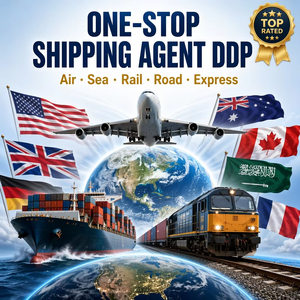
Our multimodal operational architecture synthesizes four core transport modes into high-efficiency corridors:
- Sea-Air Combined Corridor (via Middle East Hubs): Vessels route heavy industrial cargo from East Asian ports (Ningbo/Shanghai) to Middle East transshipment hubs (Jebel Ali / Dubai Cargo Village), where goods are transferred within 6 hours into air freighters bound for Frankfurt (FRA), London Heathrow (LHR), or New York (JFK).
- Trans-Eurasian Rail-Truck Intermodal Network: Connecting inland Chinese manufacturing hubs (Zhengzhou, Xi'an, Chengdu) directly to European logistics centers (Duisburg, Malaszewicze) via railway, followed by last-mile reefer or curtain-side trucking delivery under customs seal.
- Americas DDP Express Corridors: Integrated ocean FCL/LCL consolidation coupled with automated US CBP Automated Manifest System (AMS) and ISF filings, guaranteeing smooth delivery to Amazon FBA fulfillment centers and regional distribution centers.
3. Technical Analysis of Multimodal Transport Solution Categories
To assist global procurement specialists and supply chain managers in evaluating transit options, the following comparative matrix details operational performance parameters across major multimodal modalities from China:
| Transport Solution Mode |
Avg. Transit Time |
Cost Index |
Reliability Factor |
Best Suited For |
| Express Air DDP (Direct) |
3 – 5 Days |
High ($$$$) |
99.2% |
High-value electronics, medical devices, urgent seasonal inventory |
| Sea-Air Multimodal DDP |
10 – 14 Days |
Medium-High ($$$) |
96.8% |
Fast-fashion, automotive components, high-margin consumer goods |
| China-Europe Rail Intermodal |
16 – 20 Days |
Moderate ($$) |
94.5% |
Industrial machinery, solar equipment, bulk retail merchandise |
| Ocean Freight DDP (FCL/LCL) |
25 – 38 Days |
Economical ($) |
92.0% |
Heavy equipment, raw materials, large volume standard goods |
Customized Route Optimization Framework
Modern supply chain managers no longer rely on rigid single-lane logistics. Through dynamic route switching, if maritime transit corridors encounter congestions or canal bottlenecks (such as Suez or Panama Canal restrictions), our control tower reroutes cargo from ocean vessels onto overland rail or sea-air bridges, preserving shelf-life and preventing factory line downtime.
4. Global Procurement Trends in Multimodal Logistics (2025–2030)
As enterprise organizations navigate regulatory shifts, environmental mandates, and geopolitical realignments, procuring multimodal freight services requires anticipating macro trends that will shape global trade over the next decade.
A. Integration of AI-Driven Predictive Route Intelligence
Leading Chinese multimodal logistics manufacturers are embedding artificial intelligence and machine learning algorithms directly into transit management software. Predictive analytics now evaluate real-time weather patterns, port congestion indexes, vessel AIS data, and customs clearance queues to dynamically recommend route adjustments prior to cargo dispatch. This reduces transit delay risks by an estimated 34% annually.
B. Decarbonization & Scope 3 Emissions Compliance
With the implementation of the European Union's Carbon Border Adjustment Mechanism (CBAM) and strict global ESG reporting frameworks, corporate buyers are obligated to audit Scope 3 supply chain emissions. Multimodal transport is pivotal in achieving corporate net-zero targets: shifting long-haul freight from pure air cargo to sea-air or rail intermodal solutions decreases carbon dioxide emissions per ton-kilometer by up to 78%.
Strategic Trend Watch: Top-tier Chinese logistics factories now issue verified Carbon Emission Certificates alongside Bill of Lading documentation, enabling enterprise procurement leads to satisfy quarterly ESG disclosure requirements smoothly.
C. Expansion of All-Inclusive DDP (Delivered Duty Paid) Sourcing Models
The global trade market has experienced a decisive shift away from traditional FOB (Free on Board) terms toward full-service DDP (Delivered Duty Paid) door-to-door models. Under DDP arrangements, the multimodal freight manufacturer assumes comprehensive responsibility for origin handling, export customs, international transit, destination duty payments, VAT processing, and last-mile trucking delivery. This eliminates unexpected administrative costs for the buyer and drastically simplifies accounting workflows.
D. Regionalization & Near-Shoring Buffer Warehousing
To combat localized trade shocks, global brands are adopting "China+1" and strategic buffer storage models. Multimodal transport partners are leveraging bonded warehousing facilities in key transshipment zones (such as Dubai Airport Freezone, Jebel Ali Free Zone, and European inland ports) to store safety stock closer to target markets, allowing 24-hour regional order dispatch.
5. Technological & Operational Advancements in Intermodal Transport
The technological infrastructure supporting Chinese multimodal logistics manufacturers has undergone significant modernization, delivering heightened operational efficiency and end-to-end transparency.
1. IoT-Powered Smart Container Telematics
Modern intermodal container fleets are increasingly outfitted with advanced Internet of Things (IoT) sensor arrays. These devices broadcast real-time telemetry data including GPS geographical coordinates, internal temperature, relative humidity, shock/vibration impacts, and door-opening alerts directly to cloud monitoring dashboards. For high-value goods, pharmaceutical products, and sensitive electronics, this real-time monitoring ensures strict quality control throughout multi-stage transshipments.
2. Automated Customs Clearance & Digital Twins
Through integration with national single-window customs networks (such as US ACE, EU ICS2, and UAE Customs portals), documentation auditing is increasingly automated. AI parsing tools pre-screen Commercial Invoices, Packing Lists, and Certificates of Origin for Harmonized System (HS) code accuracy, duty tariff classification, and trade agreement compliance before cargo arrival, effectively reducing clearance times from days to hours.
3. Blockchain-Based Smart Contracts & Electronic Bills of Lading (eBL)
The transition from paper-based Bills of Lading to digitized, blockchain-verified Electronic Bills of Lading (eBL) represents a monumental leap forward. By executing title transfers and release orders digitally, transaction processing times are reduced from 7–10 shipping days to under 15 minutes, drastically lowering demurrage overhead at destination ports.
6. Enterprise Procurement FAQ: Frequently Asked Questions
Below are authoritative responses to critical operational and regulatory questions frequently raised by global logistics directors, procurement officers, and supply chain executives.
What distinguishes Multimodal Transport from Intermodal Transport?
While both terms involve using multiple modes of transportation (sea, air, rail, road), Multimodal Transport is executed under a single legal contract with one primary transport operator (Multimodal Transport Operator / MTO) who assumes full liability for the entire journey. Intermodal Transport involves separate contracts with individual carriers for each leg of the transit. Sourcing a dedicated multimodal manufacturer provides a single point of accountability and streamlined claims processing.
How is DDP (Delivered Duty Paid) calculated for multimodal shipments from China to the USA/EU?
DDP pricing includes factory pickup fees in China, export customs clearance, international freight charges (sea/air/rail), destination port terminal handling fees (THC), custom brokerage fees, applicable import duties (calculated based on the specific product HS code and country of origin tariffs), local sales tax/VAT, and final door delivery via bonded truck or courier express.
What key documentation is required for seamless international customs clearance?
Standard mandatory export documentation includes: 1) Commercial Invoice stating exact valuation and Incoterms; 2) Detailed Packing List specifying gross/net weight and dimensions; 3) Master Bill of Lading (MBL) or House Bill of Lading (HBL); 4) Certificate of Origin (COO); and 5) Commodity-specific permits (such as MSDS for chemical/battery goods, CE/FDA certificates, or phytosanitary documents for agricultural imports).
How can buyers mitigate port congestion and demurrage charges?
Demurrage and detention fees occur when containers remain inside port terminals past free storage allowances. We prevent these costs by utilizing pre-customs clearance protocols, securing extended free-time agreements (14–21 days) with ocean carriers, and scheduling immediate off-dock drayage to regional off-site warehouses upon vessel discharge.
Can multimodal transport accommodate temperature-sensitive or dangerous goods (DG)?
Yes. Specialized multimodal solutions utilize active temperature-controlled reefer containers and refrigerated air cargo holds for cold-chain items. For Dangerous Goods (DG), certified hazmat specialists manage UN-approved packaging, hazardous cargo declarations, and specialized transport routing compliance under IMO/IATA regulations.
What is the standard turnaround time for obtaining a custom multimodal freight quotation?
Standard door-to-door or port-to-door freight quotes are delivered within 4 to 12 business hours. For complex, multi-modal, or project cargo requirements involving heavy-lift machinery, fully itemized engineering and freight proposals are issued within 24 hours.
7. Strategic Sourcing Framework for Global Buyers
To optimize your corporate logistics procurement and secure high-reliability multimodal routes from China's leading manufacturing hubs, follow this actionable four-step framework:
- Conduct a Cargo Profile Audit: Detail your product dimensions, gross weight, target lead times, and maximum landed cost thresholds.
- Select Optimal Incoterms: Transition critical high-volume product lines to DDP terms to lock in predictable landed costs and reduce internal administrative burdens.
- Establish Route Redundancy: Implement dual-corridor logistics (e.g., allocating 70% volume to sea-air intermodal and 30% to direct rail/ocean) to safeguard operational continuity.
- Partner with Certified Specialists: Engage a vetted multimodal manufacturer with proven customs compliance records, transparent pricing structures, and active operational hubs in key transshipment zones.
Optimize Your Supply Chain Today
Contact our global multimodal logistics specialists to request an itemized door-to-door freight quote, schedule a route optimization consultation, or receive our complete service portfolio catalog.