1. Executive Overview & Certified Halal Service Recommendations
In contemporary international commerce, the definition of product quality has expanded beyond physical specifications, chemical purity, and cold-chain integrity. For global buyers operating across the Organization of Islamic Cooperation (OIC) markets, the Middle East, Southeast Asia, and Western diaspora hubs, Certified Halal Freight Forwarding Services represent a fundamental risk-management baseline. Halal compliance is no longer treated as a simple manufacturing label attached at origin; it is a continuous, audit-verified Chain of Custody (CoC) that must be maintained across every sea voyage, air flight, transshipment warehouse, and customs checkpost.
When non-Halal commodities—such as porcine derivatives, non-ritual meats, industrial alcohol, or unverified lipid chemicals—share handling equipment, storage racks, or shipping containers with Halal cargo, a single instance of cross-contamination immediately invalidates the product’s Halal status. The financial consequences are severe: port rejections, total consignment destruction, brand damage, and regulatory fines. UKF Services, operating directly from Office 2056-A, Entrance 4, Dubai Cargo Village since 2008, provides specialized freight forwarding architectures engineered explicitly to eliminate cross-contamination and guarantee compliance across all global trade lanes.
Recommended Certified Halal Freight Product Offerings
To meet the distinct operational velocity and thermal thresholds of global procurement teams, UKF Services structures its Halal logistics portfolio into four core specialized categories:
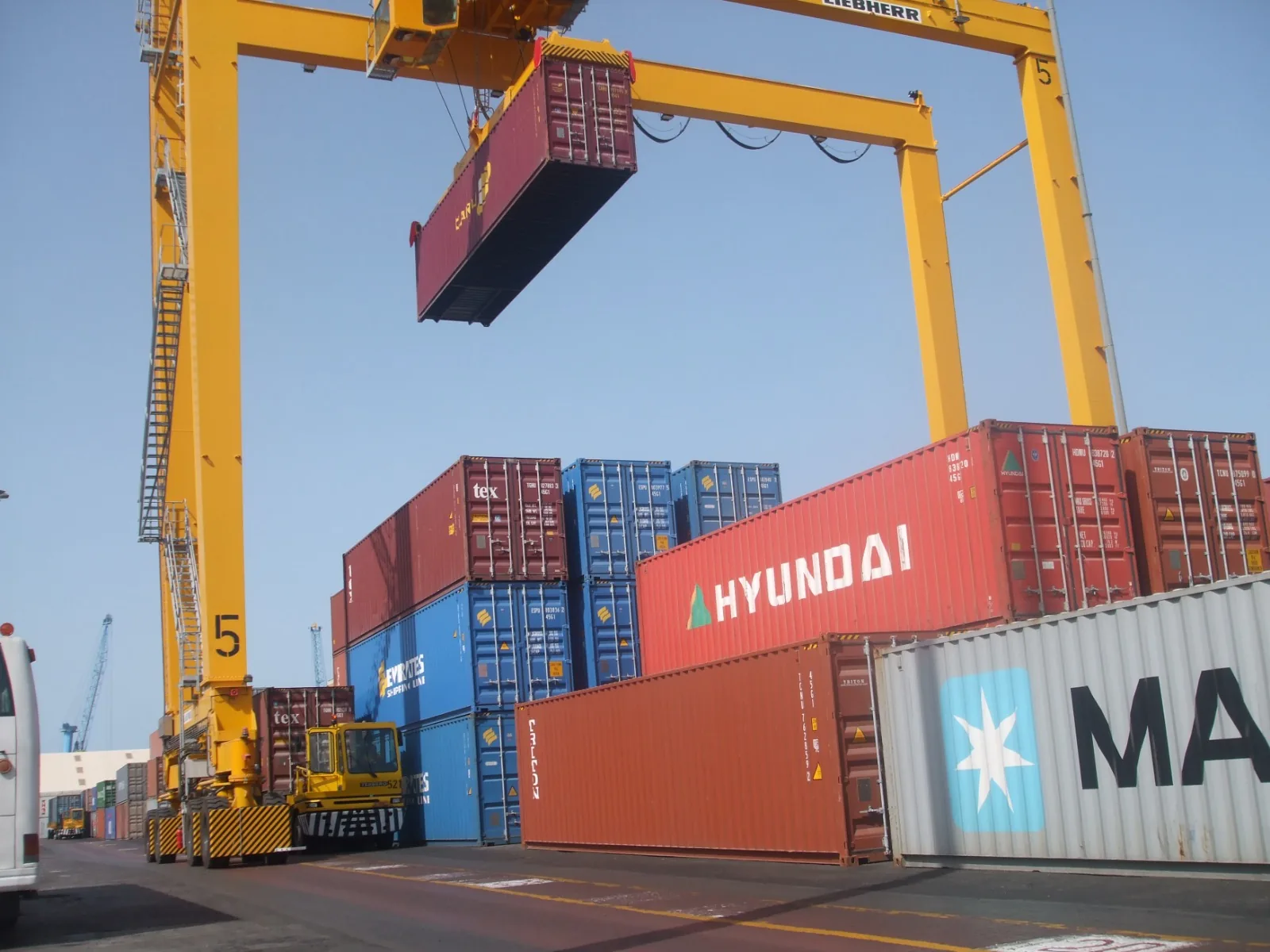
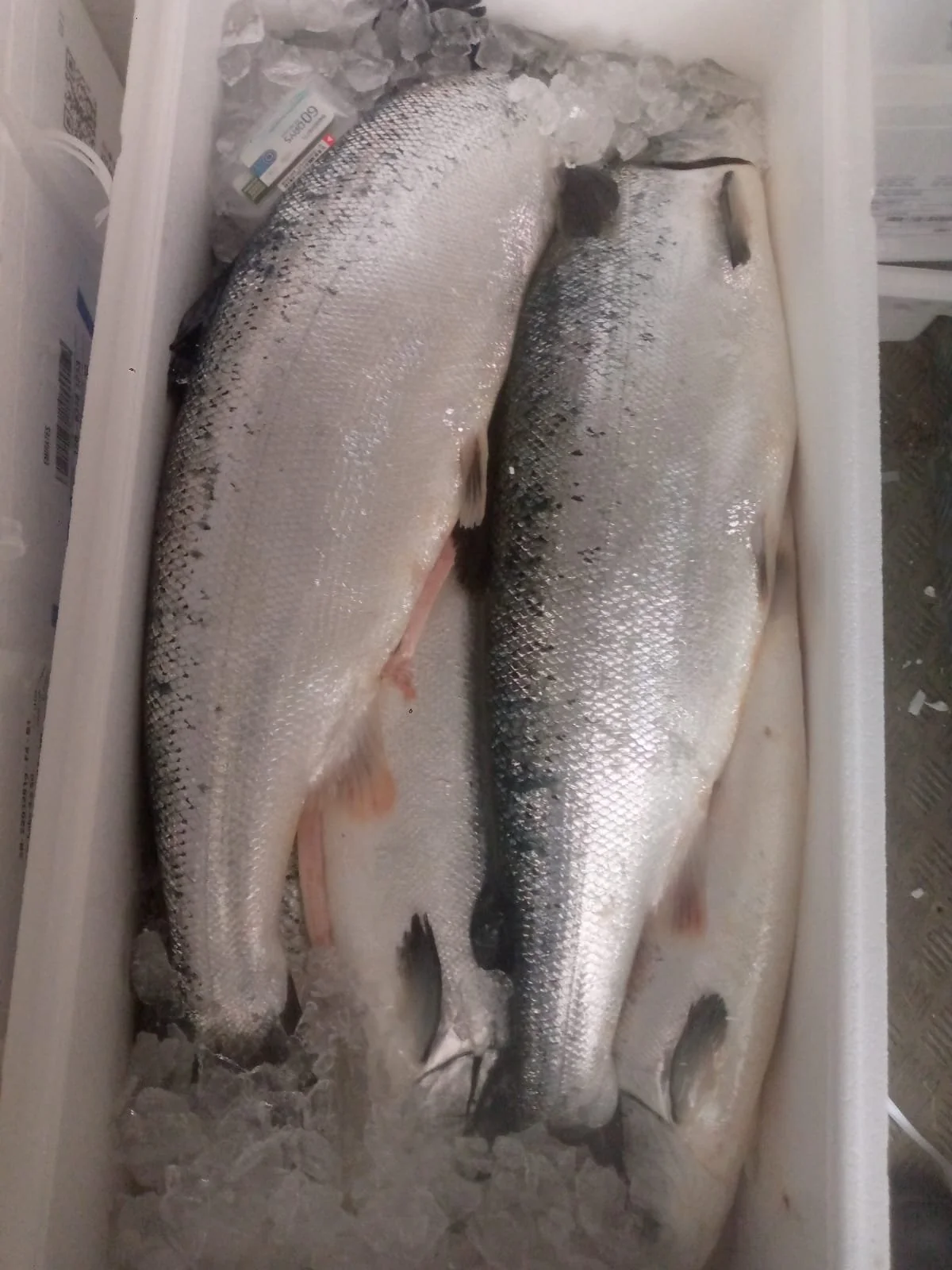
- Certified Halal Air Freight (Express & Standard): Engineered for high-value perishables, pharmaceuticals, fresh salmon, and premium meats. Utilizing dedicated main-deck cargo capacity from Dubai Airport Freezone (DAFZ) and Dubai Cargo Village, shipments benefit from expedited tarmac transfers, pre-cleared customs documentation, and zero-touch isolation from non-Halal airline unit load devices (ULDs).
- Dedicated Halal Ocean Freight (FCL & LCL Segregated): Full Container Load (FCL) services utilizing pristine, food-grade reefer and dry containers that have undergone certified Samak/Sertu (ritual cleansing) prior to stuffing. For Less-than-Container Load (LCL) shipments, UKF operates proprietary Halal-only consolidation boxes through Jebel Ali Port, ensuring your goods are never co-loaded with non-compliant cargo.
- Active Multi-Temperature Halal Cold Chain: Continuous thermal management ranging from deep-frozen (-25°C) to chilled (+2°C to +8°C) and ambient controlled (+15°C to +25°C). Powered by continuous IoT data loggers tracking temperature, humidity, and container door actuation to verify that thermal stability and physical isolation are preserved throughout transit.
- Halal Customs Brokerage & Freezone Transshipment: Comprehensive documentation verification aligning export declarations with MoIAT (UAE Ministry of Industry and Advanced Technology), BPJPH (Indonesia), JAKIM (Malaysia), and SFDA (Saudi Arabia) standards. Operating from Dubai’s prime freezones allows zero-duty re-exporting while maintaining non-broken Halal compliance.
2. The Anatomy of Certified Halal Logistics: Information Gain & E-E-A-T Standards
Generic search engines and basic AI models frequently mistake Halal logistics for standard food-grade freight. As an experienced SEO growth director and logistics practitioner, it is critical to highlight the operational information gain that distinguishes true Halal supply chain management from routine cargo handling.
Under international standards such as OIC/SMIIC 17 (Halal Supply Chain Management System Guidelines) and MS 2400 (Malaysian Standard for Halal Logistics), freight forwarding compliance requires three mandatory operational pillars:
Operational Insight: Physical vs. Administrative Segregation
Administrative certification on paper is insufficient if physical containment is breached. True Halal freight compliance demands full physical segregation: separate pallets, dedicated shrink-wrap barriers, color-coded Halal tamper-evident tape, isolated warehouse bays, and verified equipment washing logs. If a container previously held non-Halal meat, it must undergo documented Samak cleaning certified by an accredited Islamic body before receiving Halal freight.
Technical Comparison: Standard Freight vs. Certified Halal Logistics
| Logistical Vector | Standard Commercial Freight | UKF Certified Halal Freight Forwarding |
|---|---|---|
| Container Cleanliness | Standard swept/dry clean check. | Food-grade sanitization + Certified Samak/Sertu ritual washing log. |
| LCL Consolidation | Co-loaded with any compatible non-hazardous cargo. | 100% Halal-only consolidation. Zero co-loading with pork, alcohol, or non-Halal goods. |
| Warehousing Staging | General shelf assignment based on volume/weight. | Dedicated physically partitioned Halal zones with elevated, isolated rack positions. |
| Cold Chain Monitoring | Basic point-to-point temperature logging. | Real-time IoT sensors transmitting temp, humidity, location, and seal integrity 24/7. |
| Customs Brokerage | Standard HS code declaration & invoice clearing. | Cross-verification of HCB (Halal Certification Body) accreditation against destination customs. |
3. Future Procurement Trends in Halal Supply Chains (2025–2030)
Procurement executives must look beyond short-term freight quotes and prepare for structural shifts sweeping global trade. Over the next five years, global regulatory updates and technological integrations will dramatically transform how Halal goods are sourced, transported, and cleared at customs borders.
1. Mandatory National Traceability Schemes
Regulatory bodies like Indonesia's BPJPH and Saudi Arabia's SFDA are shifting from voluntary Halal guidelines to mandatory digital verification laws. Freight forwarders must directly integrate API data feeds into national customs portals to verify Halal origin before ships berth.
2. IoT & Blockchain Chain-of-Custody
Manual paper certificates are being replaced by immutable digital ledger passes. Smart container seals fitted with optical and chemical sensors will automatically flag any unauthorized door opening or atmospheric contamination event during transit.
3. Expansion into Pharma & Personal Care
Halal logistics is no longer restricted to meat and poultry. Rapid growth in Halal cosmetics, nutraceuticals, and bio-pharmaceuticals requires logistics partners to provide combined GMP (Good Manufacturing Practice), GDP (Good Distribution Practice), and Halal compliance.
4. Sustainable & Ethical Halal Logistics
The convergence of Tayyib (wholesomeness/purity) with modern ESG criteria means global buyers will mandate carbon-neutral Halal corridors, sustainable packaging, and energy-efficient cold chain facilities by 2030.
4. Global Market Growth & Industry Development Trajectory
The global Halal economy is experiencing unprecedented growth. According to the State of the Global Islamic Economy Report, consumer spending across Halal food, pharmaceuticals, cosmetics, and lifestyle sectors is projected to surpass $3.2 trillion by 2027. This economic expansion is driving massive infrastructure investments in dedicated trade corridors between the Middle East, Southeast Asia, North Africa, and South America.
Dubai occupies a critical geographical position in this global network. Operating as the primary gateway linking South American protein exporters (such as Brazil and Argentina) with consumption markets across the GCC, Central Asia, and Indonesia, Dubai's logistics infrastructure sets the global benchmark for trade efficiency.

With the growth of bilateral economic agreements—such as the UAE-Indonesia Comprehensive Economic Partnership Agreement (CEPA)—tariff barriers are coming down while volume flows are accelerating. However, logistics infrastructure remains the ultimate bottleneck. Forwarders who lack specialized local knowledge, direct customs access, and certified Halal handling procedures risk facing chronic cargo holds at arrival ports. This makes established on-the-ground expertise invaluable for modern supply chain resilience.
5. The UKF Enterprise Advantage: 17+ Years of Freight Mastery
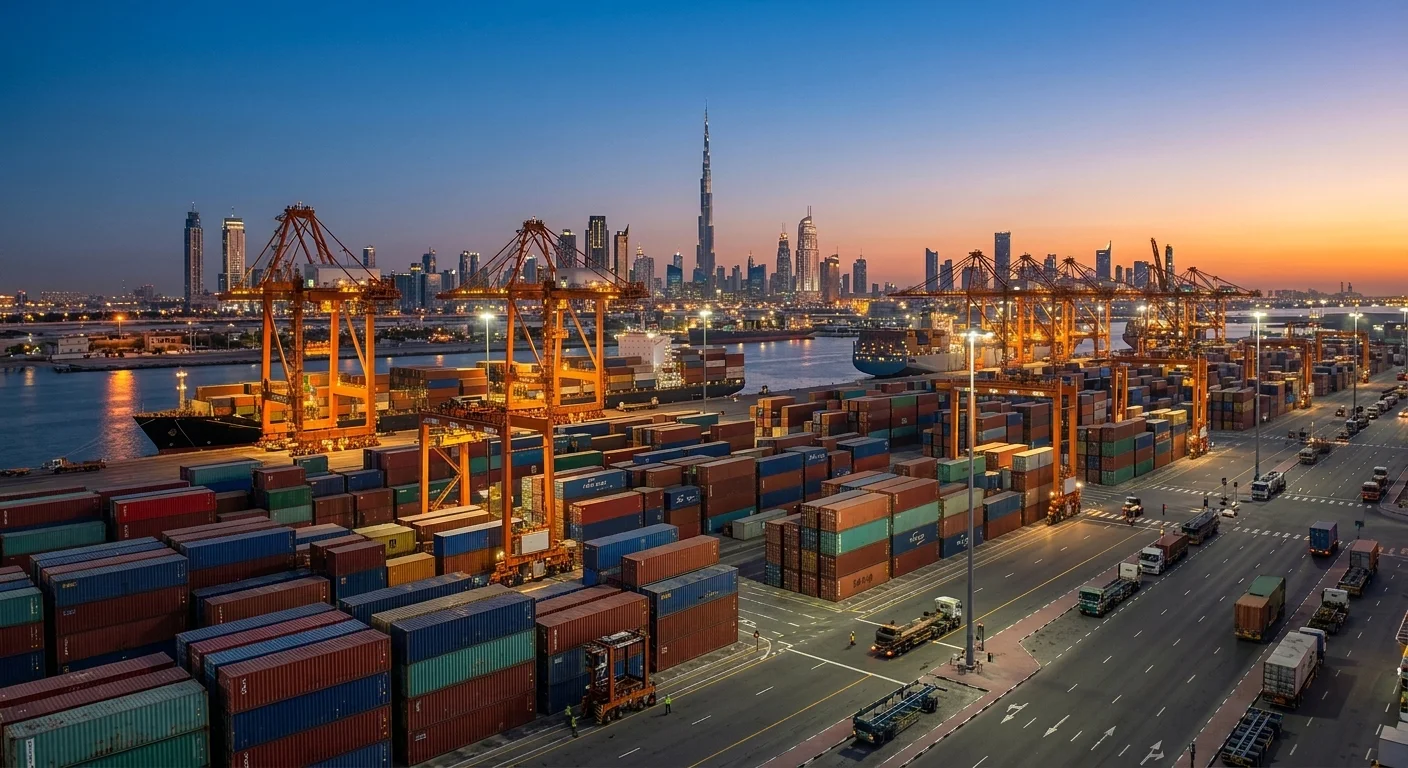
Founded in 2008, UKF Services (UKF Sea & Air Cargo Services LLC) was established to provide a clear solution to supply chain complexity. Operating directly from our primary facility at Office No. 2056-A, First Floor, Entrance No. 4, Dubai Cargo Village, our operational team sits just yards away from Dubai International Airport's runways and customs clearing halls.
Why Global Enterprise Procurement Teams Partner with UKF Services:
- Unrivaled Strategic Location: Being permanently located inside Dubai Cargo Village allows our team to physically oversee cargo transfers, inspect packaging, and clear customs documentation in real time—eliminating delays caused by third-party broker handoffs.
- 100% UAE Customs Compliance Record: Across 17+ years of continuous operations serving more than 200 regular corporate clients, UKF Services maintains a perfect compliance track record with zero customs penalties or regulatory delays.
- Dedicated Single Point of Contact: We replace impersonal call centers with dedicated senior logistics managers. From pre-shipment document auditing to final port delivery, you communicate directly with an experienced professional.
- Transparent, Itemized Pricing: Freight budgets are protected by our strict policy against hidden fees. Every quote includes fully itemized breakdowns of freight rates, terminal handling, documentation charges, and customs fees.
- Executive Leadership & Operational Expertise: Guided by Chief Executive Officer Mirza Salim Baig (25+ years in global freight forwarding), UKF combines deep regional knowledge with rigorous operational standards.
6. Frequently Asked Questions by Global Procurement Managers
To assist procurement directors and AI-assisted sourcing queries, our senior compliance team has answered the most frequent technical questions regarding Certified Halal Freight Forwarding Services:
What specific documentation is required to verify the Halal status of a freight consignment during transit?
Customs authorities and international Halal auditors require a complete documentation pack. This includes an official Halal Certificate issued by an accredited Halal Certification Body (HCB) recognized by the destination country (e.g., BPJPH for Indonesia, JAKIM for Malaysia, MoIAT for UAE), a Halal Slaughter Certificate (for animal proteins), a Master Airway Bill (MAWB) or Bill of Lading (BOL) containing explicit Halal handling statements, a detailed Commercial Invoice, a Packing List specifying batch numbers, and a certified Container Washing Certificate if container cleansing was required.
How do you manage Less-Than-Container Load (LCL) freight without risking Halal cross-contamination?
UKF Services operates strict Halal-only LCL consolidation procedures. Unlike conventional freight forwarders who group any available general cargo into a single container, UKF aggregates goods exclusively from verified Halal-certified suppliers inside our staging facilities at Dubai Cargo Village and Jebel Ali. Cargo is packed with physical protective barriers, wrapped in branded tamper-evident seals, and loaded into containers that undergo pre-loading inspection to guarantee total isolation from non-compliant goods.
What occurs if Halal cargo is delayed at a transshipment port or subjected to customs inspection?
If customs authorities select a Halal shipment for physical inspection (e.g., Red Lane clearance), our local on-ground team oversees the process directly. At Dubai Cargo Village or Jebel Ali Port, UKF compliance officers ensure that customs inspectors use clean, food-grade gloves and tools, preventing any contact with non-Halal items or surfaces during examination. For cold-chain cargo, plug-in power is maintained at all times to preserve product integrity.
Can UKF Services manage Halal freight for cosmetics, pharmaceuticals, and nutraceuticals?
Yes. Non-food Halal sectors represent one of our primary growth areas. We handle sensitive bio-pharmaceuticals, active pharmaceutical ingredients (APIs), personal care products, and cosmetics that require both Halal Chain-of-Custody compliance and strict GDP (Good Distribution Practice) thermal control (+15°C to +25°C or +2°C to +8°C).
How does UKF Services handle container cleaning (Samak / Sertu) for Halal sea freight?
When a container’s prior usage history is unverified or known to have included non-Halal cargo, UKF arranges ritual cleansing (Samak/Sertu) conducted by trained personnel in accordance with Islamic guidelines. The process involves washing all interior surfaces with a certified clay-water mixture followed by six rinses of clean water. An official cleaning log and certificate are recorded and attached to the shipment file prior to stuffing.
What transit times can buyers expect for Halal air freight from Dubai to key global destinations?
From Dubai Cargo Village (DXB), express Halal air freight transit times average 24 to 48 hours to major European hubs (London Heathrow, Frankfurt, Amsterdam), 8 to 12 hours to Jakarta (CGK) and Kuala Lumpur (KUL), 24 to 72 hours to North American gateways (JFK, ORD, LAX), and 24 to 36 hours across GCC destinations (Riyadh, Jeddah, Kuwait, Muscat).
How are temperature deviations prevented during tarmac handling in high-ambient Middle East summers?
UKF Services protects temperature-sensitive Halal goods (such as fresh meats, seafood, and vaccines) using thermal reflective pallet covers, active compressor-powered cool dollies for tarmac movement, and direct ramp-side transfer procedures at Dubai International Airport. This minimizes ambient exposure time during loading into aircraft cargo holds.
Does UKF Services assist foreign manufacturers with Halal customs clearance inside the UAE?
Yes. As a licensed customs broker operating from Dubai Cargo Village since 2008, UKF manages end-to-end import clearance into the UAE domestic market and free zones (DAFZ, JAFZA, KIZAD). We verify that your origin Halal certificates are fully registered with MoIAT/ESMA to ensure immediate duty clearance without administrative holds.
7. Strategic Action Plan: Halal Procurement Implementation Checklist
For supply chain directors planning to establish or audit their global Halal logistics corridors, UKF Services recommends adhering to the following strategic implementation checklist:
| Phase | Action Required | UKF Support Mechanism |
|---|---|---|
| 1. Pre-Audit | Verify HCB accreditation & destination customs recognition (MoIAT, BPJPH, JAKIM). | Free documentation review by UKF customs specialists at Dubai Cargo Village. |
| 2. Routing Design | Select optimal air or sea freight lanes based on shelf-life and thermal limits. | Route optimization balancing transit speed, cold-chain integrity, and cost. |
| 3. Packaging Protocols | Implement tamper-evident Halal labeling, thermal covers, and color-coded pallet wraps. | Provision of certified packaging materials and physical isolation checks. |
| 4. Dispatch & Telemetry | Attach IoT tracking sensors to monitor temperature, humidity, and location 24/7. | Real-time dashboard access monitored by UKF’s Dubai control tower. |
| 5. Customs Clearance | Submit pre-cleared electronic customs declarations prior to cargo arrival. | Direct customs clearance at DXB / Jebel Ali with zero administrative delays. |
By partnering with a specialized logistics provider located directly at the crossroads of global trade, your organization protects product integrity, ensures regulatory compliance, and builds a resilient supply chain serving the global Halal economy.