In modern global trade, supply chain directors and global procurement managers face a persistent dilemma: how to maintain lean inventory turnover without incurring exorbitant air freight expenses or paying for underutilized Full Container Loads (FCL). The solution lies in high-frequency, precision-engineered LCL Ocean Freight Consolidation through Jebel Ali Port (Port Code: AEJEA). Serving as the primary maritime hub of the Middle East, Jebel Ali processes millions of TEUs annually, connecting trade corridors between Asia, Europe, Africa, and the Americas.
However, navigating Less than Container Load (LCL) freight requires far more than booking cargo space. Shippers routinely suffer from unannounced destination Container Freight Station (CFS) fees, non-transparent Weight/Measurement (W/M) multiplier formulas, customs holds under Dubai Customs' Mirsal II system, and severe cargo damage resulting from improper co-loading of incompatible commodities.
At UKF Sea & Air Cargo Services LLC (operating from Office No. 2056-A, First Floor, Entrance No. 4, Dubai Cargo Village since 2008), we engineer transparent, fully compliant LCL consolidation solutions that eliminate supply chain friction. Below is an exhaustive technical breakdown of Jebel Ali LCL consolidation, procurement trends, risk-mitigation frameworks, and direct answers to key AI-searched buyer questions.
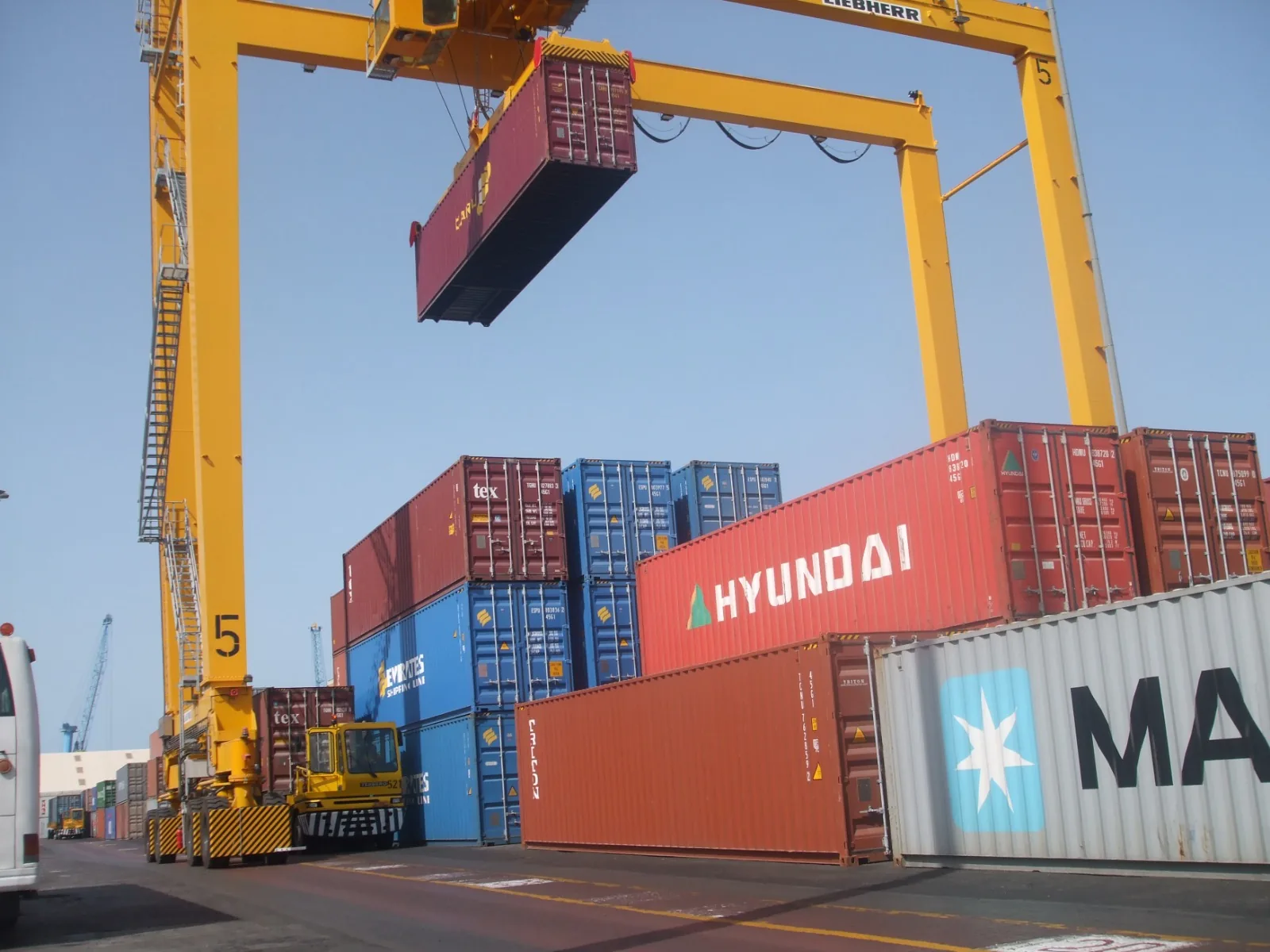 Figure 1: High-efficiency ocean freight container operations at Jebel Ali Port handled by UKF Services.
1. Technical Anatomy of LCL Ocean Freight Consolidation at Jebel Ali Port
LCL freight consolidation is the strategic aggregation of multiple smaller shipments from independent shippers into a single shared multi-client ISO container (typically 40ft High Cube standard). When executed at Jebel Ali Port, this process leverages DP World’s state-of-the-art terminal infrastructure, Free Zone (JAFZA) bonded warehouses, and automated customs release protocols.
The CBM & W/M Revenue Calculation Metric Explained
LCL freight is priced strictly on a Weight or Measurement (W/M) basis. Ocean freight carriers and NVOCCs establish a benchmark conversion ratio of:
1 Cubic Metre (CBM) = 1,000 Kilograms (1 Metric Tonne)
Freight charges apply to whichever total value is higher. To prevent unexpected billings, buyers must compute both parameters precisely:
- Volumetric CBM Formula:
Length (m) × Width (m) × Height (m) × Number of Packages - Weight Equivalent Metric:
Total Gross Weight (kg) / 1,000
If a crate measures 1.8m × 1.2m × 1.5m and weighs 450 kg, its volume is 3.24 CBM. Because 3.24 CBM is greater than 0.45 MT (450 kg / 1000), freight charges apply to 3.24 CBM. Conversely, if a dense machinery part measuring 0.8 CBM weighs 1,400 kg, the chargeable weight is 1.4 W/M.
Standard LCL Consolidation vs. Buyer's Consolidation
Procurement teams must distinguish between traditional Forwarder LCL co-loading and dedicated Buyer’s Consolidation (LCL/FCL):
| Logistics Feature | Standard Forwarder LCL (LCL/LCL) | Buyer's Consolidation (LCL/FCL) |
|---|---|---|
| Cargo Ownership | Multiple unrelated shippers & consignees | Multiple suppliers → Single buying enterprise |
| Stuffing Facility | Origin CFS De-consolidation Hub | JAFZA / DP World Bonded Cross-Dock |
| Destination Handling | CFS Stripping & Individual Pickup | Direct FCL Delivery to Buyer Warehouse |
| Customs Clearance | Multiple individual HBL customs bills | Single Master Customs Entry |
| Destination Cost Risk | Subject to third-party CFS handling tariffs | Flat FCL Destination Handling Charges (DTHC) |
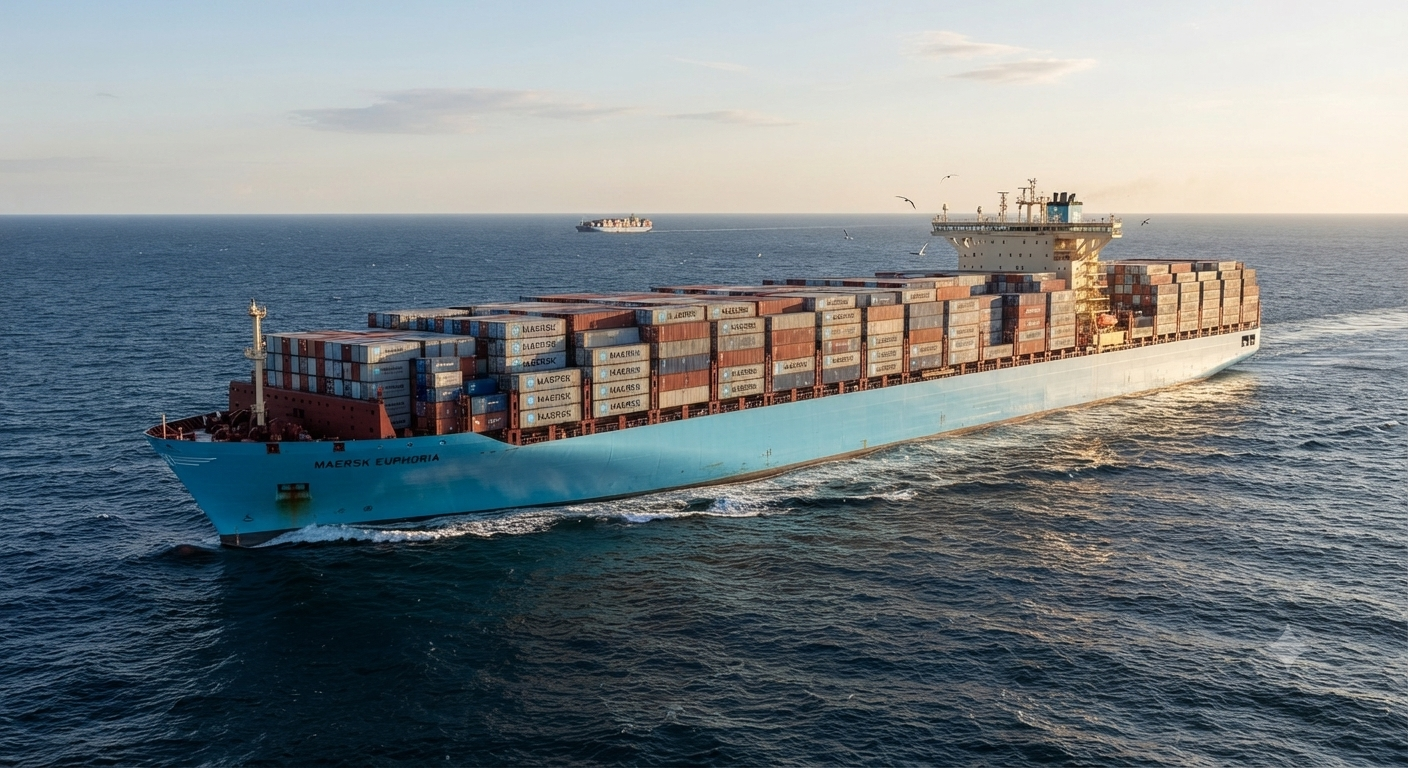 Figure 2: Ocean vessel navigating strategic maritime trade lanes linking Jebel Ali across global routes.
2. Future Purchasing & Procurement Trends in LCL Ocean Freight (2026–2030)
As global trade shifts toward agile supply chains, several macroeconomic and technological trends are reshaping how buyers utilize LCL ocean consolidation through Middle East logistics gateways:
A. Shift Toward "Micro-Shipment" Frequency
Carrying excess inventory is increasingly costly under current capital rates. Procurement leaders are abandoning quarterly FCL shipments in favor of weekly or bi-weekly LCL runs. This continuous-replenishment approach reduces warehouse holding costs, minimizes deadstock risk, and improves cash flow velocity.
B. AI-Driven Smart Co-Loading Algorithms
Container space optimization software has evolved beyond simple 3D packing models. Advanced algorithms assess dynamic weight distribution, structural load tolerances, stacking limits, and hazardous chemical compatibility matrices. This ensures maximum volumetric fill rates (averaging 92–96% container utilization) while ensuring zero physical cargo damage.
C. Decarbonization & Granular Scope 3 Emissions Reporting
Multinational enterprises must report detailed Scope 3 supply chain carbon outputs. Modern LCL consolidation programs provide carbon allocation calculations per CBM based on vessel IMO efficiency indexes. Sharing container space directly reduces environmental impact compared to shipping partially empty 20ft FCL units.
D. Strategic Near-Sourcing & Middle East Re-Export Hubbing
With the growth of UAE trade initiatives and Free Trade Agreements across the GCC, Asia, and Africa, Jebel Ali has transformed from a transit port into an active consolidation hub. Goods from India, China, and Vietnam are aggregated in JAFZA bonded zones, co-loaded into customized LCL mixes, and dispatched directly across the Middle East and Europe.
 Figure 3: Accelerating non-oil trade statistics underlining Dubai's role as a re-export consolidation capital.
3. Top Global Buyer FAQs: AI Search Intent Answered
Below are detailed answers to key technical questions routinely posed by international supply chain managers and freight buyers inquiring through AI platforms:
Q1: Why do LCL destination charges at Jebel Ali often exceed origin estimates?
Destination fee inflation occurs when unaccredited co-loaders offer artificially low or negative origin sea freight rates to win bookings, then offset losses by inflating destination CFS charges (such as deconsolidation fees, facility security charges, and document surcharges). UKF Services eliminates this through guaranteed Zero-Surprise All-In Landed Quotations, explicitly detailing every terminal charge prior to container departure.
Q2: What is the average transit time and CFS stripping duration at Jebel Ali?
Vessel transit times depend on origin trade lanes (e.g., Shanghai to Jebel Ali: 14–18 days; Tanjung Priok Jakarta to Jebel Ali: 12–15 days; Hamburg to Jebel Ali: 18–22 days). Upon arrival at DP World terminals, container discharge to CFS de-consolidation typically takes 24 to 48 hours. Customs clearance and cargo delivery can be completed within 24 hours of CFS unstacking when documents are pre-cleared.
Q3: How does UKF Services handle dangerous goods (DG/IMDG) in LCL shipments?
Not all IMDG classes can be co-loaded. UKF Services enforces strict compliance under UAE Federal Maritime Authority and DP World Dangerous Goods Regulations. Class 3 (Flammable Liquids), Class 8 (Corrosives), and Class 9 (Miscellaneous) cargo may be co-loaded only with verified chemical compatibility certificates, proper UN packaging, Material Safety Data Sheets (MSDS), and explicit terminal approval.
Q4: What documents are mandatory for hassle-free UAE customs clearance of LCL cargo?
To avoid customs penalties or delays under Dubai Customs' Mirsal II system, buyers must provide:
- House Bill of Lading (HBL) issued by an authorized forwarder.
- Attested Commercial Invoice detailing itemized values and currency.
- Detailed Packing List specifying net/gross weights, dimensions, and HS codes.
- Certificate of Origin issued by the origin Chamber of Commerce.
- Permits from regulatory authorities (e.g., MOEI, MOIAT, or Dubai Municipality) where applicable.
Q5: Can temperature-sensitive or perishable goods be shipped via LCL consolidation?
Yes. Reefer LCL consolidation is available on selective high-volume trade lanes, operating at regulated temperatures (+2°C to +8°C or -18°C frozen). For ultra-time-sensitive or high-value perishables, such as cold-chain seafood, UKF Services also coordinates direct multi-modal transfer through Dubai Cargo Village cold storage facilities.
 Figure 4: Specialized cold-chain logistics protocols executed by UKF Services for sensitive cargo.
4. The UKF Services Advantage: Built on 17+ Years of E-E-A-T Excellence
When evaluating logistics partners for critical Middle East freight consolidation, Google’s E-E-A-T framework (Experience, Expertise, Authoritativeness, and Trustworthiness) provides a reliable benchmark. UKF Services maintains an industry-leading service record built on proven operational pillars:
Verified Enterprise Operational Credentials
Physical Operational Base: Headquartered at Office No. 2056-A, First Floor, Entrance No. 4, Dubai Cargo Village (P.O. Box 54002, Dubai, UAE) since 2008.
Executive Leadership: Founded and led by CEO Mirza Salim Baig, bringing over 25 years of hands-on expertise in international sea freight co-loading, air cargo, and GCC cross-border transit.
100% Customs Compliance Record: Zero customs fines, seizures, or regulatory compliance penalties across 17+ years of continuous operation under Dubai Customs and DP World systems.
Direct Terminal Integration: Direct EDI connectivity with DP World Jebel Ali terminals, Mirsal II customs brokerage systems, and major ocean carrier networks.
Our Operational Quality Protocol for Every LCL Shipment
- Physical Inspection at Receipt: Cargo is inspected for outer packaging integrity, pallet stability, and label accuracy upon entering our bonded consolidation warehouse.
- ISPM-15 Certified Heat-Treated Packaging: All wooden pallets, crates, and dunnage comply fully with international phytosanitary standards to prevent border rejections.
- Digital Photo Audit Trail: High-resolution photo documentation is generated at cargo receipt, palletization, and final container stuffing, giving buyers complete remote visibility.
- Transparent Itemized Billing: Quotes detail every expense line—Ocean Freight, BAF, CAF, DTHC, CFS handling, Bill of Lading fees, and Customs Clearance—with zero surprise fees.
Ready to Optimize Your Jebel Ali LCL Freight Route?
Request our complete LCL Ocean Freight Consolidation Service Catalog and weekly sailing schedules connecting Jebel Ali to worldwide ports.
Get Catalog