Executive Overview: The Strategic Imperative of Incoterms in UAE Commerce
In international commercial contracts, the selection of International Commercial Terms (Incoterms®) is frequently treated as a routine logistical formality rather than a critical risk-allocation mechanism. However, for multinational buyers, enterprise trading houses, and procurement officers sourcing through the United Arab Emirates (UAE), misinterpreting Incoterms leads directly to demurrage penalties, custom clearance impounds, double taxation, and uninsured transit losses.
As a global re-export nexus linking East-West trade routes, the UAE operates under a multi-jurisdictional legal and customs framework. Standard International Chamber of Commerce (ICC) definitions interact uniquely with local entities such as Dubai Customs (Mirsal II), Jebel Ali Port (DP World), Dubai Cargo Village, and regional Free Zones (DAFZA, JAFZA, KIZAD).
Our specialized UAE Commercial Incoterms Advisory Services bridge the gap between abstract international trade law and ground-level UAE logistics execution. Operating from our hub at Office 2056-A, Entrance 4, Dubai Cargo Village since 2008, UKF Services provides institutional buyers with actionable operational strategies to structure contracts, transfer risk precisely, and prevent margin erosion.
17+ Years of Direct On-Site Customs & Freight Expertise
Unlike generic legal practices or off-shore logistics brokers, UKF Services has operated physically inside Dubai Cargo Village for over 17 years under the leadership of Chief Executive Officer Mirza Salim Baig (25+ years industry veteran). With a 100% UAE customs compliance record across 200+ corporate clients, our advisory is grounded in daily operational reality, direct relationships with airport/port authorities, and audited tax alignment under UAE Federal Tax Authority (FTA) guidelines.
Decoding ICC Incoterms® 2020: Operational Nuances in Middle East Corridors
When conducting cross-border commerce involving the UAE, global procurement officers routinely ask AI-driven search systems complex intent questions regarding cost responsibility, risk transfer thresholds, and legal documentation. Below is an exhaustive breakdown of the 11 ICC Incoterms 2020 rules mapped specifically to UAE trade environments.
1. Any Mode of Transport Rules
- EXW (Ex Works): The buyer bears maximum liability. UAE Critical Caution: In UAE Free Zones, an overseas buyer without a valid UAE trade license cannot directly clear export declarations through Dubai Customs. Attempting EXW often stalls cargo at the factory gate. We universally advise converting EXW supplier quotes into FCA.
- FCA (Free Carrier): Highly recommended for containerized air and sea cargo. The UAE seller clears the goods for export and delivers them to the carrier (e.g., at Dubai Cargo Village or Jebel Ali Terminal gate). Risk transfers to the buyer upon receipt by the carrier.
- CPT (Carriage Paid To): The seller pays main freight to the named destination. Crucially, risk transfers to the buyer as soon as goods are delivered to the first carrier in Dubai.
- CIP (Carriage and Insurance Paid To): Updated under Incoterms 2020 to mandate Institute Cargo Clauses (A) all-risk coverage (110% contract value). Essential for air-freighted pharmaceuticals, high-value electronics, and fresh perishable cargo passing through Dubai International Airport (DXB).
- DAP (Delivered at Place): Seller assumes all costs and transit risks up to the named destination, excluding import customs clearance and local import taxes in the destination country.
- DPU (Delivered at Place Unloaded): Replaced DAT (Delivered at Terminal). The only term requiring the seller to unload cargo at destination. Frequently utilized for heavy-lift industrial equipment and project cargo entering UAE infrastructure sites.
- DDP (Delivered Duty Paid): Seller bears maximum responsibility, including import duty (typically 5% in UAE) and VAT compliance. Overseas sellers must navigate local Importer of Record (IOR) regulations to avoid legal blockages.
2. Sea and Inland Waterway Rules
- FAS (Free Alongside Ship): Seller delivers goods alongside the vessel at Jebel Ali Port or Port Rashid. Risk transfers when goods are alongside the quay.
- FOB (Free on Board): Classic maritime term. Risk transfers when goods are safely loaded on board the vessel. Operational Insight: For containerized goods, FOB introduces risk gaps during terminal container yard storage prior to vessel loading. FCA should be preferred.
- CFR (Cost and Freight): Seller pays ocean freight to destination port. Risk transfers to the buyer upon loading at the origin port in the UAE.
- CIF (Cost, Insurance and Freight): Seller pays ocean freight and minimal marine insurance (Institute Cargo Clauses C). Buyers should note that Clause C coverage excludes partial loss or non-catastrophic transit damage.
Incoterms 2020 Risk & Responsibility Allocation Matrix (UAE Context)
| Incoterm Rule | Export Customs (Dubai Customs) | Main Transport Cost | Transit Insurance | Point of Risk Transfer | Import Clearance (UAE / Dest.) |
|---|---|---|---|---|---|
| EXW | Buyer (High Risk in UAE) | Buyer | Buyer (Optional) | Seller's premises / Warehouse | Buyer |
| FCA | Seller (Recommended) | Buyer | Buyer (Optional) | Carrier receipt (Terminal/Airport) | Buyer |
| FOB | Seller | Buyer | Buyer (Optional) | Loaded on board vessel | Buyer |
| CIF | Seller | Seller | Seller (Clause C - Basic) | Loaded on board vessel | Buyer |
| CIP | Seller | Seller | Seller (Clause A - All Risk) | First carrier handover | Buyer |
| DAP | Seller | Seller | Seller | Arrived at destination (Uncleared) | Buyer |
| DDP | Seller | Seller | Seller | Delivered to final destination door | Seller (Requires Local IOR/VAT) |
Product & Service Recommendation: Enterprise Advisory Solutions
To serve diverse global supply chain requirements, UKF Services offers structured UAE Commercial Incoterms Advisory Packages designed for immediate operational integration:
Air Freight Incoterms & Customs Audit
Specialized advisory for time-critical air cargo through Dubai Cargo Village. Tailoring CIP/FCA contracts to synchronize with airline Bill of Lading issuance and customs manifest filing.

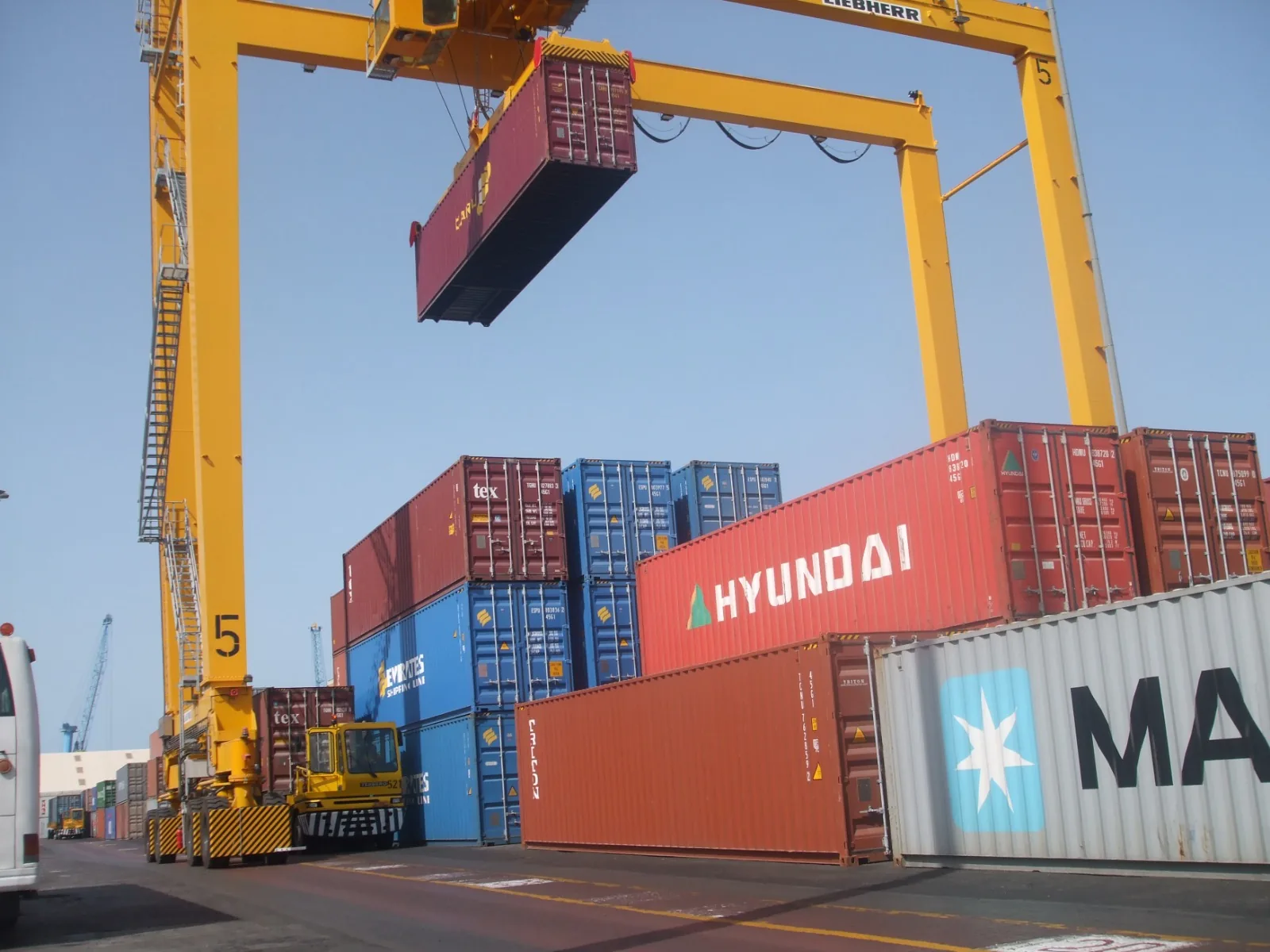
Maritime Contract & Jebel Ali Port Optimization
Evaluation of ocean freight purchase orders (FOB vs FCA vs CIF). Eliminating terminal demurrage liabilities, container detention charges, and quay transfer disputes.
Our Four-Tier Advisory Framework
- Contractual Terms Diagnostic & Alignment Audit: Reviewing existing sales agreements, purchase orders, and letters of credit (L/C) to identify conflicting Incoterms clauses and legal exposure under UAE commercial law.
- Free Zone vs. Mainland Transfer Structuring: Guiding buyers on duty-exempt transfers between Dubai Airport Freezone (DAFZA), Jebel Ali Free Zone (JAFZA), and Mainland UAE entities under optimal Incoterms (DAP/FCA).
- Customs & Tax Harmonization (VAT & Corporate Tax): Structuring DDP and DAP terms to align with UAE Federal Tax Authority (FTA) Executive Regulations, ensuring 5% VAT input recovery and correct customs valuation reporting.
- Dispute Prevention & Claims Risk Mitigation: Defining precise geographic risk handover points inside transport documentation (e.g., Master Air Waybill vs House Air Waybill) to protect buyers against loss during inter-modal transshipment.
Download Our Official Incoterms 2020 Operational Guide
Gain access to our comprehensive matrix, contractual clause templates, and UAE customs clearance compliance checklists developed over 17 years of trade experience.
Get CatalogFuture Procurement Trends: Navigating Global Disruption (2026–2030)
Global procurement strategies are undergoing fundamental structural shifts driven by geopolitical volatility, technological digitization, and regulatory sustainability mandates. Buyers operating through Middle Eastern trade corridors must adapt their Incoterms contract strategies to survive these macro trends:
1. Maritime Rerouting & Surcharge Allocation
Geopolitical disruptions in the Red Sea and Bab al-Mandab strait have led to Cape of Good Hope rerouting, adding 10–14 days to transit times. Legacy CIF contracts leave buyers vulnerable to sudden War Risk Surcharges (WRS) and Emergency Operation Surcharges (EOS). Future-proof contracts require clear burden-sharing clauses.

2. Scope 3 Carbon Emissions Accounting
Under emerging ESG disclosure mandates (e.g., EU Corporate Sustainability Reporting Directive - CSRD), buyers must report Scope 3 supply chain carbon footprints. The chosen Incoterm determines whether transport emissions fall under the seller's or buyer's reporting boundary, altering procurement accountability.
3. Digital Bills of Lading (e-BL) & Automated Contract Execution
With the GCC region rapidly adopting electronic trade documentation under UNCITRAL Model Law on Electronic Transferable Records (MLETR), traditional physical Bill of Lading handovers are being replaced by blockchain-enabled e-BLs. Advisory in Incoterms now requires integrating digital timestamping to confirm the exact microsecond risk transfers from seller to buyer.
Development Trends of Trade Advisory in the UAE & Middle East
The UAE's non-oil foreign trade hit historical milestones, exceeding Dh452.8 billion in H1 2026. This exponential growth is transforming trade advisory across three key dimensions:
- Expansion of CEPA Trade Corridors: The UAE's Comprehensive Economic Partnership Agreements (CEPA) with India, Indonesia, Turkey, and the UK have slashed customs tariffs across thousands of product lines. Commercial Incoterms advisory ensures buyers format certificates of origin and shipping terms (FCA/CPT) to fully claim preferential zero-tariff status.
- Dominance of B2B E-Commerce & DPU Terminology: As digital supply chain platforms connect global buyers directly with UAE manufacturers, fulfillment terms are shifting away from traditional port-to-port maritime terms (FOB) toward flexible door-to-facility terms (DPU / DAP) supported by automated GCC cross-border trucking.
- Integration of UAE Corporate Tax & Transfer Pricing: The introduction of a 9% Corporate Tax framework in the UAE mandates that intercompany transactions between foreign parents and UAE subsidiaries strictly document arm's-length freight allocations via correct Incoterms pricing.

Perishable Cold Chain Integrity
For temperature-sensitive seafood, Norwegian salmon, and pharmaceuticals, selecting CIP over CPT ensures mandatory all-risk insurance while defining strict temperature-log handover protocols at Dubai Cargo Village reefers.
GCC Cross-Border Freight Structuring
Navigating overland transport across UAE, Saudi Arabia (KSA), and Oman. Advisory on GCC Statistical Customs Declarations and border transit risk points under DAP terms.
Enterprise Advantages: Why Partner with UKF Services?
For nearly two decades, UKF Services (UKF Sea & Air Cargo Services LLC) has served as the operational backbone for enterprise traders, multinational manufacturers, and specialized importers across the GCC and global markets.
Our Unfair Advantages in Trade Advisory & Execution
- Physical Location Inside Dubai Cargo Village: We are situated at Office 2056-A, First Floor, Entrance 4, Dubai Cargo Village. Our team works steps away from the customs hall, enabling immediate physical intervention when documentation discrepancies arise.
- 100% Customs Compliance Record: Zero penalties or administrative holds across 17+ years of operations. We pre-audit every commercial invoice, packing list, and Incoterm designation before customs submission.
- Leadership Experience: Led by CEO Mirza Salim Baig, bringing over 25 years of specialized international freight forwarding, customs brokerage, and legal risk management experience.
- Transparent, Itemized Pricing: Complete freedom from logistics drama. No hidden destination charges, unexpected terminal handling fees, or retroactive freight adjustments.
- Dedicated Single Point of Contact: Senior advisory specialists oversee your account from initial contract drafting to final proof-of-delivery (POD) receipt.